October 28, 2005

TIME OUT: Conference Swag

We love it.
When the description is more interesting than the session, conference goers skip out to search for swag. This year’s ACP conference was swag deficient. Perhaps the hasty relocation to Kansas City from New Orleans caused vendors to scale back their presence, if they even showed up at all. However for every item we pass up, someone back home will want it.
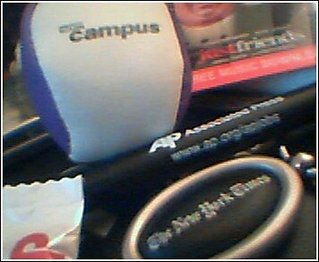
I knew a copy editor who loved media pens. She squealed like it was Christmas morning when I returned from the ACP conference in Orlando with a 25 pens – all for her. On the final day of that conference, I asked conference organizers for extra name badges. They served our staff as reporting kits. They held our press passes, reporter’s notebooks, pens, and business cards.
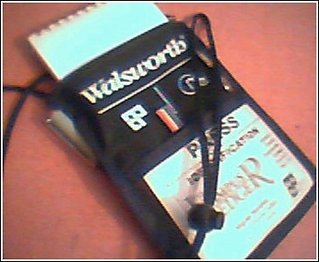
A veteran of the journalism conference circuit, I’ve inadvertently started collecting reporters notebooks. I have about 75. Occasionally, I dig into my bag of swag and give a staffer a gift from the media gods. For many, a Knight-Ridder hacky sack or New York Times coffee mug goes a long way when it’s accompanied by praise for a job well done.
Many journalists have problems with the ethics of accepting swag, as they should. Don't trade your integrity for an iPod. Staff manuals should contain a code of ethics addressing gifts. If there's any question about accepting swag -- don't.
My theory is that the praise accompanying the re-gifted swag is the real value. Staffers don't care about the “Rent” poster or the pen from the Associated Press.
Just as you never know what’s going to send a staff member over the edge, you never know what’s going to put a smile on his or her face. Before throwing away share the wealth while offering praise.

October 27, 2005

TIME OUT: Doing the Blog

For those who attended the blogging session at the Associated Collegiate Press & College Media Adviser conference in Kansas City, Mo., here are the sites I mentioned in my presentation.

Steve Buttry's "Training Tracks," originated on the No Train, No Gain website. Now his blog comes from the American Press Institute (API) website and is mirrored on NTGNG, which also houses the archives. Steve welcomes e-mail from student journalists and compiled a list of newscoaches across the country willing to visit college newsrooms. For the CD ROM, Steve will send a disk of his handouts, which I've used in my newsroom and as a freelance journalist for The Kansas City Star.

Speaking of API, its Media Center Blog, morph, offers insight on convergence, new media and seeks innovation in storytelling. It strives to create a forum for guest bloggers.

One of my favorites simply because of the name is Grumpy Old Editor from the Observer-Reporter (Washington, Penn.) Grump A.K.A. Park Burroughs, offers insight into the reporting and editing process while combining the infamous quality editors have in excess. Student grumps will admire his random complaint in The Day's Gripe.
Read freelance journalist Bob Baker's experiment in using blog-style in print as he profiled a blogger.

Copy Editors, or those who want to understand them, should visit Testy Copy Editor. Most of the discussion takes place on the site's message boards because most of the copy editors hate that journalists abandon style and grammar when blogging.

The largest list of journalism blogs comes from CyberJournalist.Net. The list contains ongoing and limited blogs from news sites as well as journalists' personal and professional blogs.

Of course, check out my Journalism Links on the right side of this page for other journalism sites that have created blogs and pod ... er ... nanocasting.

Also feel free to e-mail me about a specific issue and I'll devote a TIME OUT topic to it.

October 6, 2005

TIME OUT: You're Not the Boss of Me

"You're not the boss of me."

That phrase or one similar is said everyday in student and professional newsrooms across the country.
Sometimes our small newsroom staffers wonder, "Who is the boss of me?" In a perfect newsroom, the staff manual would define roles and responsibilities. However when it comes to staff manuals, usually the only people who read them are the people who wrote them.
When on the quick and dirty, staffers don't follow the newsroom organizational chart, they follow the power structure -- they aren't the same. Staffers gravitate to people who help, ignore those who can't and avoid those who impede.
  • Do you help others without taking over their projects?
  • Are you frustrated at being ignored because you don't have answers and consequently don't have answers because you're constantly ignored?
  • Does your passive-aggressive nature cause you to block the success of yourself and others?

Well, stop it.

September 28, 2005

COMMENTARY: Mano-a-Mano

Lately, I’ve been feeling under the boot of “the man” even though sometimes it’s a woman.

We had this giant meeting with the president of the college, the vice-president of student services, the director of student life, our regular two print journalism instructors, adviser and staff.

It was supposed to be our regular staff meeting where we discuss the status of our current issue, address problems, planning the next issue, etc. However with the smell of bacon in the room and not wanting to grant prior review, we decided to turn the floor over to our visitors.

The nodding heads stayed quiet except to say they support our efforts and hoped we’d make an effort to get both sides of the story. President Carlsen made thinly veiled references to my columns, the nodding heads supported. He asked me straight out if the administration ever censored our newspaper. I told him no one has ever prevented us from printing stories. However, people censor us by not consenting to interviews, not responding to phone calls and e-mail requests and generally dragging their feet until publication day comes and goes. He raised his hand and waved me off.

I asked him with the Hosty v. Carter controversy, if he would sign a document saying he would never censor our paper. He said that he’d sign it in a minute. Like he’d refuse to sign in front of administrators and student journalists – one of which recorded the meeting.

Our editor in chief also hammered the point that opinions are not news stories. He also told them they could write a letter to the editor or guest column citing their concerns.

The bravest of the head nodders and a man I have learned to respect sent us a column the next day.

September 1, 2005

COMMENTARY: Backdoor Censorship

With our first issue of the semester in the bins, our administrators decided to use policy as a means of backdoor censorship. However, they didn’t anticipate policy being used against them.
The Ledger published my column focusing on the college’s failure to implement a tuition payment plan they promised two years ago when they raised tuition. Josh wrote a column admonishing the college for not supporting an employee and her unborn baby after her husband, also an employee, was killed as he attempted to intervene in a robbery. I also wrote a news story chronicling how local residents fought against the college when the board of trustees tried to take acquire a park for campus expansion.
The prospect of two student journalists who freelance for The Kansas City Star covering issues on campus didn’t sit well with the college. They ‘dismissed’ me as senior editor the day the paper came out. They said I didn't have the credit hours the position required even though registration remained open for two more days. I also previously told them I had money issues but would make enrollment deadline.
With a tuition payment plan, I could have registered and paid my first installment before classes started.
Without knowing they fired me, I extended my credit limit on my VISA to pay for class. When I came to campus the next day, my adviser, under direction of her supervisor, informed me I was fired the day before and even if I enrolled in the needed class -- I was still fired. I had to deliver the news to Josh, the editor in chief and the man who hired me, since they neglected to include him in the decision.
I enrolled in my class, reapplied for my job and researched college policy. I found out college employees can request an exit interview -- so I did. I spent the day familiarizing myself with 'policy,' gathering college-produced recruitment materials featuring my image and compiling my published columns critical of the college. I presented the package at my exit interview and stated for the official college record that this act serves as backdoor censorship. I also said I have nothing to lose and would pursue the issue as far as I could.
The next day my adviser sent me an e-mail saying I was rehired and my pay would not be interrupted by the week I was off staff.
It’s not over. The college will try to find another way to silence me and intimidate the staff. This abuse of power shows me they’re scared.