Showing posts with label ACP. Show all posts

November 3, 2008

NEWS: Ledger Earns Top J-Prize

One for the Ledger

The Campus Ledger earned top honors at the Associated Collegiate Press (ACP) and College Media Adviser (CMA) National College Media Convention in Kansas City, Nov. 1.
The Ledger, celebrating it's 30th year, brought home the Pacemaker award for excellence in collegiate journalist. Since 1927, the Pacemaker has been the highest honor available to ACP members and is considered the Pulitzer Prize of college media.
Twenty-five newspapers earned the Pacemaker. Judges from The St. Petersburg Times selected 48 entries for recognition out of 241 entries in three categories.
According to ACP newspaper finalists were selected based on excellence in the following areas:
  • Coverage and content
  • Quality of writing and editing
  • Leadership on the opinion page
  • Evidence of in-depth reporting
  • Layout and design
  • Photography, art and graphics.
Later in the fall, the ACP webpage will feature links to publication images and comments from the judges.
ACP is a division of the National Scholastic Press Association, a non-profit education organization which strives to educate and recognize the work of student journalists, to improve the quality of student media and to foster careers in media.

April 9, 2008

AWARDS: All-State, Again

From the college's electronic mail server, Infolist:

THE CAMPUS LEDGER WINS AWARD
The Campus Ledger was named the best student newspaper in its division at a state journalism conference April 6-7 in Wichita. The student newspaper of Johnson County Community College was given the All-Kansas award by the Kansas Associated Collegiate Press for the second year in a row. To receive the award, the paper must score outstanding marks in all categories judged, including writing, visuals and design, based on three issues from the 2007-08 academic year. The editor of The Campus Ledger, Alexia Stout-Lang, was named first runner-up in the Journalist of the Year contest and received $100 from the Kansas Press Association.

Members of The Campus Ledger also received 24 individual awards, including six first-place certificates. Nathan Lang, former online editor, won first place in headline writing and news photography, and sports editor Stephen Montemayor won first place in sports-column writing and second place in sports features. Artist Juniper Tanpuz took first in illustration and both second and honorable mention in cartoons. The adviser is Anne Christiansen-Bullers. Individual awards included:

First place – Nathan Lang, headline writing and news photography; Justin Millard, sports feature; Stephen Montemayor, sports-column writing; Miguel Morales [emphasis added], column writing; Juniper Tangpuz, illustration.

Second Place – Katherine Kramer, interior-page design; Stephen Montemayor, sports feature; Miguel Morales, column writing and news writing; Juniper Tanpuz, cartoons.

Third Place – Matt Galloway, feature writing.

Honorable Mention – Campus Ledger Staff, news writing; the team of Jennifer Hallock, Alexia Stout-Lang, Linda Friedel, Miguel Morales and Stephen Montemayor, special section; Matt Galloway, sports feature and news writing; Katherine Kramer, interior-page design; Justin Millard, sports news; Stephen Montemayor, sports feature; the team of Miguel Morales and Kevin Mimms, news writing; Miguel Morales, headline writing; Alexia Stout-Lang, column writing and review writing; Juniper Tangpuz, cartoons.

September 12, 2007

NEWS: You really like me!

Ledger earns two more honors
Kudos continue for staff that covered campus controversies

The Campus Ledger, the student newspaper of Johnson County Community College, earned two prestigious honors from two separate journalism organizations for its 2006-07 editions.

Pacemaker Finalist designation from the Associated Collegiate Press. This award, known as the Pulitzer Prize of student media, goes to the top college newspapers in the country for overall quality. The Ledger competes against 14 other community college newspapers for the award presented at the ACP's National Convention Oct. 24-29 in Washington, D.C.

Gold Medalist rating from the Columbia Scholastic Press Association. The medal rating reflects the judge’s overall score of 945 of 1,000 points, including an All-Columbian, or “best of best” rating, in The Ledger’s reporting and coverage of campus events including the investigation into multiple allegations of unlawful harassment and the search for a new president. The Gold Medalist rating is the result of an extensive evaluation of the entire year’s publications.

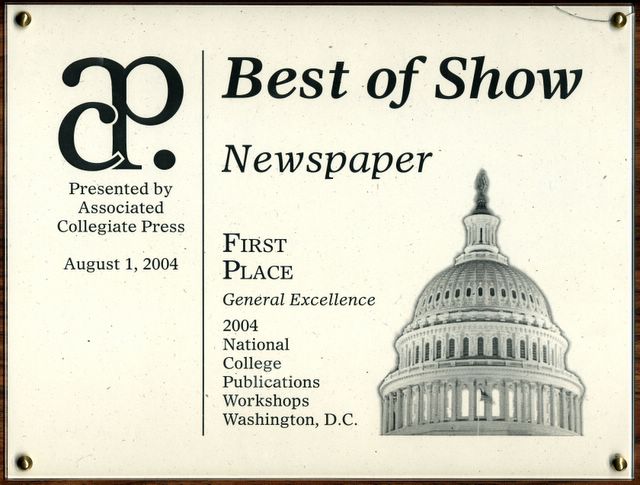
The Ledger also earned the All-Kansas award, the top award for college media, from the Kansas Associated Collegiate Press last spring. Over the summer the paper won Best in Show from ACP for overall coverage and design.

April 14, 2007

TIME OUT: Source Sourcery

This is part of my presentation covered at the KACP workshop "Handling the Big Story on Campus"

Reliable Sources:
How to get people on campus to talk

  • Remember names - Learn the names and titles of all the upper-level administrators and department heads. While no one likes to be thought of as their job title, many in academic institutions (especially the higher up the chain they are) like to be addressed as Dr. So-and-So or Dean Whoever. Don't become over familiar with these sources by using their first names, unless they ask you to.
  • Say "Thank you" - In addition to thanking a source at the moment, let a day or so pass and thank him or her again. Sometimes sources get nervous about what they may have said. A quick call, e-mail or note lets them know you understand what it took for them to meet with you in the first place.
  • Be human - If people see you as a sensationalistic, headline-busting, one-purpose newshound who's only interest is getting the story, they wont trust you. And why should they? To you, they're just walking quotes. However, if they see you as a real person, they can relate to you. Notice their office or desk and talk about similar interests. Talk about the weather. Just talk -- and not as a way to wear them down -- really talk to them. Be interested.
  • Fair to all, large and small - While its important to know the top-level administrator and department heads, know those who come in contact with them (administrative assistants, the person in the food court who serves them coffee, the custodian who cleans their office). These individuals' stories may not support your investigation but that doesn't mean their stories don't deserve to be told.
  • Finding Mr. or Ms. Right - Every division, every department, every office has an "it" person. Not only does this person know everything and everyone, he or she usually collects memo, e-mails and other documents. You need to know this person and you need have those documents. Cultivate -- not manipulate -- a relationship with this person. They usually won't want to go on the record, but who cares? They have all the background and with their documentation, you probably don't need them on the record.
  • Never miss a chance to do a simple favor - Use your resources to help out a source. If a source has a to research something campus related, take the initiative to search through old issues to see how the campus paper covered it and present him or her with a copy of the article. If a source is interested in buying or selling an item let him or her know if your papers offers free classified ads for students and staff. If one of their tips or quotes makes it into the paper, hand deliver the source a copy and say thanks. Note: When a sensitive article gets published hand delivering a copy might make your source look like a snitch. Use your best judgement.
  • Return phone calls, even the painful ones - Not returning phone calls tells a source that he or she doesn't matter to you. Sometimes a sources is simply feeling nervous and needs to talk about it or he or she just wants to chat. So chat and listen. Never give people -- especially sources -- the impression that their story ideas are silly. Even when they are.
  • Check in - Sources get nervous and sometimes they need to freak out to the one person they trusted with their story. Let them release some steam because if they keep it inside, you'll get the call saying they don't want to do the story. So check in to make sure they are doing OK. Keep them updated on your progress. Let them know how they fit into the story. They shouldn't be surprised about their participation when they pick up the paper.
  • Don't bitch and moan - It sounds simple to avoid this behavior but its not. Sources will encourage you to talk smack. Its okay to empathize with them but follow the best friend breakup rule: don't trash your best friend's ex when they break up because they just might get back together. Don't endanger your credibility by trashing someone or by whining about your editor or adviser. That doesn't instill sources with confidence in trusting you or your news organization.
  • Confidential contact - With sensitive information, advise employees not to contact you using college provided avenues of communication (employee e-mail, interoffice mail, voice messages, etc.). Legally, the college can intercept/monitor communication on its systems. Have other avenues set up for confidential communication.
  • Train sources to contact you - Many times we get our tips simply because we bump into a source as we walk across campus or when we make the effort to call them. In addition to teaching sources how confidentially contact you, teach them when to contact you like when
  • they come across information that they find interesting
  • someone gets hired, fired, promoted, awarded, or in any other way their job changes
  • things are "too" normal
  • their work flow suddenly increases or decreases
  • Walk with them - Its simple to try to conduct everything via email or over the phone. But sometimes people don't get back with you. Go to their office, they cant hang up on you when you're face-to-face. If a source can't meet with you because he or she is going to a meeting, class or home, walk with him or her. The ones who are truly busy will be glad you accomodated theri packed schedules and the ones who tried to hide from you will know next time to take your call -- or you'll hunt them down.
  • Break bread - Use those social lubricants like lunch, dinner and coffee breaks to engage sources. Because you are both out of the office, avoid using pressure tactics to get them to talk. Its lunch, not an interrogation. Note: even though you are a poor student journalist, don't let your source pay for you.
  • Always protect your source - Don't name drop with other sources or others in the newsroom. If information is off the record, its OFF THE RECORD. In a micro-community like a college, word spreads quickly if you burn a source. Conversely, word will spread if you can be trusted.
  • Enlist "source references" - Usually when you do win a source's trust, the source will tell his or her friends about you -- encourage this. However, if you're having trouble securing a source's trust, ask if it is OK to have another one of your sources contact him or her to speak of your ethics and integrity. Of course, this means first identifying a source who is willing to be your "source reference."
  • Repeat the rules - Journalists are usually pretty good about explaining on the record, off the record, not for attribution, etc. However, sources don't always remember what they agreed to initially. Remind them of how their information will be used according to your agreement. That agreement can always be renegotiated but don't give up something unless you get something equal or better in return.
  • That thing you do - Sometimes sources try to get all "deepthroat" on you for no reason. Don't let them. Explain how the reporting process works. Describe how information must be triangulated. Tell them you don't call all the shots and that you report to an editor who wouldn't believe the sky was blue if Abraham Lincoln showed him a picture if it. Tell them that sometimes stories don't get published for reasons beyond their and your control. But most of all tell them you're going to be accurate and fair -- and then, be accurate and fair.
  • Ask for help - Use other's expertise. Ask them to help you find out about XYZ ; ask them to explain how ABC works or ask for the history of JKL. Although it may not seem like it all the time, people who work in colleges really want to be of service -- so let them.

Miguel M. Morales, Johnson County Community College, for the Kansas Associated Collegiate Press convention - April 16, 2007
adapted from a handout by Larry Welborn,
The Orange County Register

April 13, 2007

TIME OUT: Working the 12 Steps

This is part of my presentation covered at the KACP workshop "Handling the Big Story on Campus"
Reporting Scandals:
12 Steps for Covering Sensitive Stories on the Administration

  1. Document everything - Keep a reporter's log narrating the obstacles and accomplishments in reporting the story. Its a safe way to express your the emotions and keep them out of the news story. Also reporters sometimes become the story. Use the log as a tool to show you did your homework. It is also helpful if you end up filing a grievance against an administrator who's attempting to stop publication of your article.
  2. Notify SPLC ASAP - Avoid of Libel by using the Student Press Law Center. The SPLC site also contains a comprehensive report: "A Dozen Tips to Avoid Being Burned by a Hot Story," and a State Open Records Law Request Letter Generator. The letter generator helps students submit state open records requests by citing the statues of their state.
  3. Memorize policy - Well, at least know what administrators are talking about when they invoke college policy. You have to know policy better than they do -- use it to your advantage.
  4. Get the documents - Using official letters, Board of Trustees meeting packets, e-mails, etc. is critical to getting accurate details and protecting yourself against libel. Your notebook, recorded interviews, e-mail and even voice messages become essential documents. Take careful notes and hang on to your notebook and recorded interviews. Make copies of everything.
  5. Allow time to get all sides - Be sure to contact every party for comment multiple time and in multiple ways. Allow a reasonable amount of time for them to respond. Plan ahead for breaking news: Get the cell numbers and home phone numbers of college spokespeople.
  6. Don't let them call it "shabby journalism" - Accuracy is always important but even more so in sensitive stories. Even a small inaccuracy will cast doubt on the entire process. Don't give anyone a reason to dismiss the credibility of the article.
  7. Name names - Because we are student journalists people will doubt the story's validity simply because we reported it. Not only do unnamed sources cast doubt on the reporter but officials can sidestep the issues raised in the article by focusing on identifying the unnamed sources.
  8. Find the student - Regular stories about the administration are hard to make relevant to students. In this case it is essential to show how this scandal affects students' daily lives.
  9. Avoid sensationalizing - Play it straight, let the facts of the scandal speak for themselves. Be able to rely on the newsworthiness of the story if anyone asks, "How could you print such a thing?"
  10. Talk to your staff - When the time comes, explain that the paper is going to publish a big story that could have repercussions for the entire staff. Give them the option of not participating in that issue because they all have different reasons for being on staff. Not all of them signed up for this kind of stuff.
  11. Be professional - Administrators will get in your face. People will start yelling at you or your staff. When complaints start rolling in, be professional. Don't let others think you take personal pleasure in the public embarrassment of others.
  12. Follow up - Be sure to update your readers on the fallout and reaction. This also helps re-emphasize the newsworthiness of the story.
Miguel M. Morales, Johnson County Community College for the Kansas Associated Collegiate Press convention - April 16, 2007
Adapted from a handout by Amy Callahan, Northern Essex Community College

November 1, 2006

AWARD: First Amendment Grant

CMA awards The Campus Ledger First Amendment Grant
College Media Advisers awarded The Campus Ledger it's Ingelhart First Amendment Fund grant. The grant of $1,000 will allow The Ledger to hold a First Amendment week to coincide with "Sunshine Week" March 11-17, 2007. Earlier this summer, The Ledger earned a First Amendment award from the Society of Professional Jounrlaists.

From CMA:
In a time of world turmoil, some urge giving up basic rights to preserve security.
Others counter that what good is heightened security if we must give up the rights that are at the core of our freedom. It will not be easy to broaden everyone’s attitudes about the First Amendment, but it needs to be done. And, in the world of student media advising, with what many view as a challenge to the rights of our students and the erosion of their First Amendment protections, the time is now to provide educational outreach.

This is where CMA can help.

The grants will be awarded to CMA members to underwrite programs designed to elevate awareness of First Amendment freedoms on an individual campus. A total of Five (5) grant awards of up to $1,000 each will be awarded this year.

The Ingelhart First Amendment Fund was established by College Media Advisers Inc. and donors to educate students about freedoms protected by the First Amendment.

The fund is named for retired Ball State University journalism professor and First Amendment scholar Louis E. Ingelhart, who has dedicated much of his life to studying, writing about and teaching the First Amendment.

AWARD: Best in Show


The CAMPUS LEDGER Wins Second Place
The Campus Ledger, the student newspaper of Johnson County Community College, won second place in the "Best of Show" contest at the National Media Convention Oct. 25-29 in St. Louis.

Single issues from newspapers across the country were judged on both design and content in the on-site contest.

October 28, 2005

TIME OUT: Conference Swag

We love it.
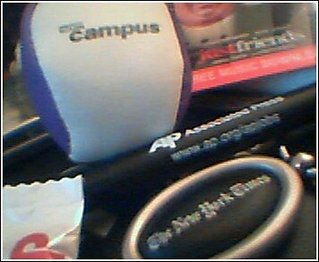
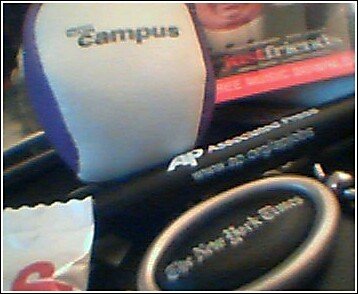
When the description is more interesting than the session, conference goers skip out to search for swag. This year’s ACP conference was swag deficient. Perhaps the hasty relocation to Kansas City from New Orleans caused vendors to scale back their presence, if they even showed up at all. However for every item we pass up, someone back home will want it.

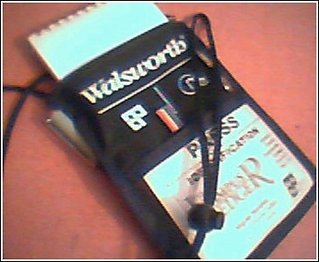
I knew a copy editor who loved media pens. She squealed like it was Christmas morning when I returned from the ACP conference in Orlando with a 25 pens – all for her. On the final day of that conference, I asked conference organizers for extra name badges. They served our staff as reporting kits. They held our press passes, reporter’s notebooks, pens, and business cards.

A veteran of the journalism conference circuit, I’ve inadvertently started collecting reporters notebooks. I have about 75. Occasionally, I dig into my bag of swag and give a staffer a gift from the media gods. For many, a Knight-Ridder hacky sack or New York Times coffee mug goes a long way when it’s accompanied by praise for a job well done.
Many journalists have problems with the ethics of accepting swag, as they should. Don't trade your integrity for an iPod. Staff manuals should contain a code of ethics addressing gifts. If there's any question about accepting swag -- don't.
My theory is that the praise accompanying the re-gifted swag is the real value. Staffers don't care about the “Rent” poster or the pen from the Associated Press.
Just as you never know what’s going to send a staff member over the edge, you never know what’s going to put a smile on his or her face. Before throwing away share the wealth while offering praise.

October 27, 2005

TIME OUT: Doing the Blog

For those who attended the blogging session at the Associated Collegiate Press & College Media Adviser conference in Kansas City, Mo., here are the sites I mentioned in my presentation.

Steve Buttry's "Training Tracks," originated on the No Train, No Gain website. Now his blog comes from the American Press Institute (API) website and is mirrored on NTGNG, which also houses the archives. Steve welcomes e-mail from student journalists and compiled a list of newscoaches across the country willing to visit college newsrooms. For the CD ROM, Steve will send a disk of his handouts, which I've used in my newsroom and as a freelance journalist for The Kansas City Star.

Speaking of API, its Media Center Blog, morph, offers insight on convergence, new media and seeks innovation in storytelling. It strives to create a forum for guest bloggers.

One of my favorites simply because of the name is Grumpy Old Editor from the Observer-Reporter (Washington, Penn.) Grump A.K.A. Park Burroughs, offers insight into the reporting and editing process while combining the infamous quality editors have in excess. Student grumps will admire his random complaint in The Day's Gripe.
Read freelance journalist Bob Baker's experiment in using blog-style in print as he profiled a blogger.

Copy Editors, or those who want to understand them, should visit Testy Copy Editor. Most of the discussion takes place on the site's message boards because most of the copy editors hate that journalists abandon style and grammar when blogging.

The largest list of journalism blogs comes from CyberJournalist.Net. The list contains ongoing and limited blogs from news sites as well as journalists' personal and professional blogs.

Of course, check out my Journalism Links on the right side of this page for other journalism sites that have created blogs and pod ... er ... nanocasting.

Also feel free to e-mail me about a specific issue and I'll devote a TIME OUT topic to it.

May 29, 2005

AWARD: Best in Show


Months of hard work paid off for my staff when The Campus Ledger won the Associated Collegiate Press "Best in Show" award for 2004.

It was the first major award the paper had won in years and proudly served as editor in chief.

April 17, 2005

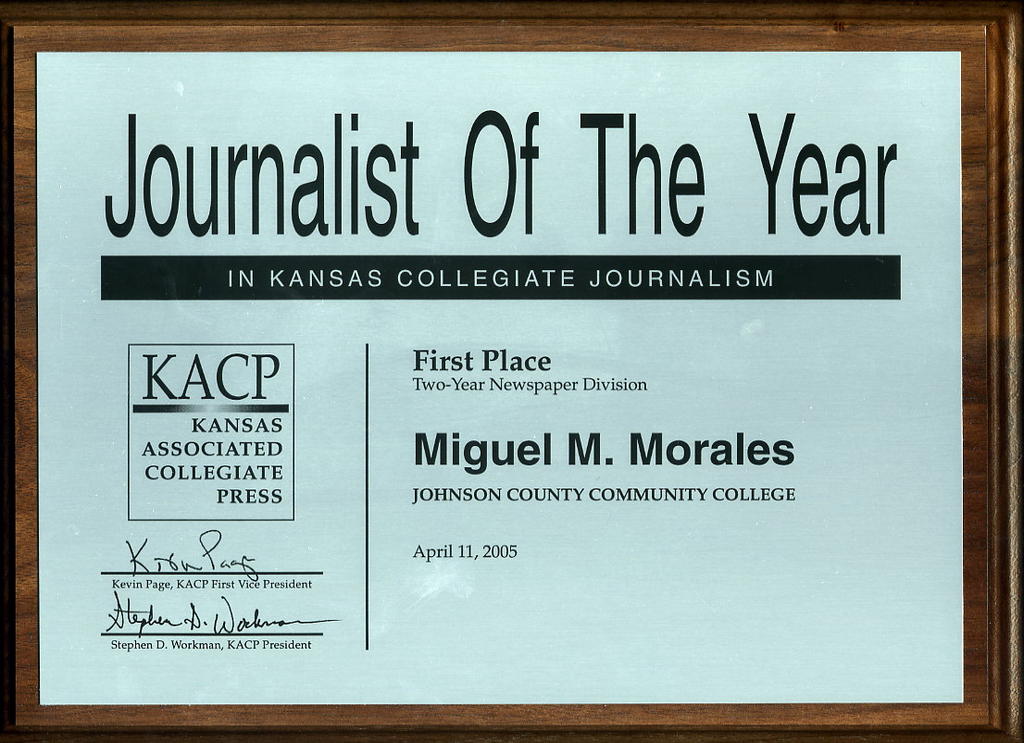
AWARD: Journalist of the Year

From a campus press release:

Miguel Morales, managing editor for The Campus Ledger, was named College Journalist of the Year by the Kansas Associated Collegiate Press at its convention in Wichita April 10-11.

The paper also won 19 individual awards.

Morales has worked as reporter, writing coach and editor-in-chief for The Ledger.

“I always knew one person could make a difference. It’s encouraging to know that sometimes that one person gets recognition,” Morales said.

In addition to Journalist of the Year for two-year schools in Kansas, for which he won a plaque and $250, Morales also won five individual awards.

Writers from The Ledger swept the feature category as the paper won first, second and third place. The Ledger received a bronze medal in the overall category. Other individual winners include:

  • First place – Miguel Morales, editorial writing; Shanxi Upsdell, feature writing; Aaron Whitebread, sports column writing
  • Second Place – Miguel Morales, feature writing and headline writing Kevin Mimms, editorial writing
  • Third Place – Miguel Morales, feature writing; Joshua Seiden, sports column writing; Dane Talley, news writing
  • Honorable Mention – Miguel Morales, editorial writing;Lisa Ash, single ad design; Robert Heishman, news photography; Kevin Mimms, sports feature writing; Shanxi Upsdell, column writing; Aaron Whitebread, sports column writing